
(top)
Cello
A common theme amongst all musical artists is to play your instrument with ease and relaxation. We could’t agree more. Lessons with Ms. Liu are grounded in teaching you to play with a strong foundation in efficient technique by discovering the easiest and most relaxed way to play the cello correctly.
As a beginner you will learn great habits from the start. If you are an experienced player you can sharpen and refine your technique, all while cultivating your mental concentration and focus. Practicing at home is crucial to improvement. Wei Liu will teach you how to practice correctly and to enjoy doing it, making the most of your time alone with your cello.
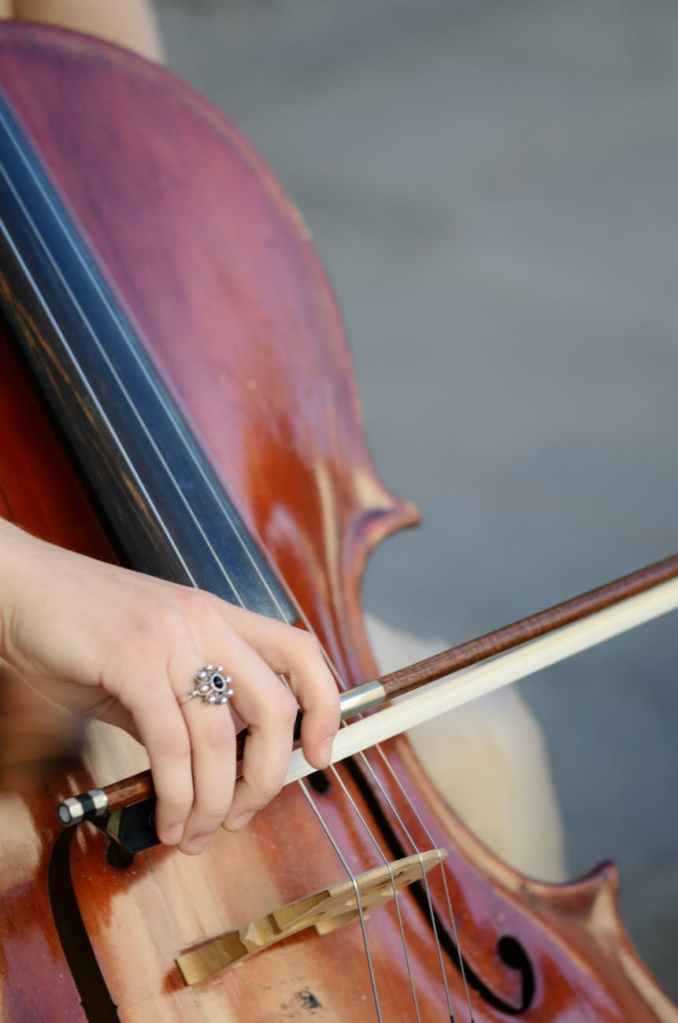
Even though Wei Liu Denton is a Paris Conservatory of Music graduate with decades of teaching and performing experience, an artist who has won national solo competitions, and who has two solo CDs to her credit, her hope for you as your teacher is for you to enjoy playing the cello and to have fun. Above all she wants to share her love and joy of music with you. (top)
Trumpet
Whether you are a beginner, a high school or college student, or perhaps a comeback player who has decided to take that trumpet out of the garage, oil the valves and see if you can still make a sound, our teacher can provide the guidance you need to improve right away.

Trumpet lessons will help you expand your range by learning solid fundamentals that focus on relaxation and balance between the air and the embouchure. You will discover how the right equipment can prepare you for success without blindly searching for the “perfect mouthpiece”. You will learn how to develop the skills necessary to play at the extremes of trumpet playing. Not just “higher, faster, louder” but “lower, slower, softer” as well.
Bill’s lessons help you find your instrument’s most beautiful tone, develop your technique and articulation, and fill your musical arsenal with the knowledge needed to tackle the difficulties and challenges that music presents. Your lessons will be appropriate to your ability level.
Bill Denton is an active professional with over thirty years of teaching experience; teaching beginners to conservatory graduates. Some of Bill’s students currently hold positions in military bands and symphony orchestras. Some have gone on to be band directors and college trumpet instructors. (back to top)
Audition coaching
Playing great is only a start to performing a winning audition. It takes more than that. During your lessons you will receive coaching from someone has won three international auditions and has been on the other side of the screen listening to and evaluating prospective candidates.

There is no secret to advancing in an audition, and once you advance your odds of winning go up dramatically. The coaching suggestions that you will receive will be honest, detailed, and encouraging and you will improve as a musician. As long as you keep improving you will eventually win a job.
To audition well you need to answer the following questions:
- What is an excerpt meant to demonstrate or uncover?
- What are the musical priorities of an excerpt?
- What do all excerpts have in common?
- What is the solo for? Is it the committee’s way of making you feel comfortable?
- How do you bring forward your best playing for the prelim, the semi, and the final?
- What can you learn from recordings?
- What’s the first question you should ask yourself when considering taking an audition?
Audition preparation is one of the most enjoyable ways to practice. It gets you in touch with some of the most beautiful music out there, and isn’t that why we play? (back to top)
Music Composition
Music today is more varied and diverse than ever before. The elements of music such as melody, harmony, texture, and form sometimes seem absent in the music of today. Defining those elements as they pertain to your music is an important ingredient to the writing process.
Composition lessons are about finding your own voice and discovering what it is you want to say. Maybe you already have pieces that you’d like some input on, or maybe you haven’t the faintest idea of where to begin.
My goal is to help you create a piece of music that expresses a bit of yourself. Your music can be whatever you want it to be; traditional to avant-garde and everything in between.
Here are some of the topics that could be covered depending on your needs and experience:
- Music theory
- Keyboard skills
- 20th century harmony
- Musical analysis
- Orchestration
- Computer edited notation
(back to top)
Jazz Improvisation
“Anyone can make the simple complicated. Creativity is making the complicated simple.”
Charles Mingus
We all improvise when we speak using the structure of language. In jazz only the language is different. Even if you have never improvised before by the end of the first lesson you will have played your first jazz solo!
Armed with a fake book and a little music theory you’ll be on your way to learning tunes and improvising over “changes”. You will learn what notes sound good and why some notes sound better than others. Charlie Parker admonishes us to “Learn the changes then forget them.” These lessons are about developing the skills and understanding of how jazz works. The forgetting comes later.
Individually tailored worksheets will provide you with security as you step into unfamiliar territory. Here are a few of the topics that are covered depending on where you are in the learning process:
- blues scales
- 12 bar blues
- key signatures (key centers)
- major scales and major scale jazz harmony
- minor blues, modes, and modal blues
- ii V I changes
- special scales (whole tone, diminished, melodic minor)
- melodic minor harmony
- form, analysis, solo transcription, learning tunes
- composing patterns and “licks”
(back to top)
 Bill Denton Trumpet Page and Denton Liu Music Academy